



Potential BPC-157 and TB-500 Synergy in Wound Repair
Research indicates that BPC-157 and TB-500, each promoting wound healing through distinct biochemical pathways, may produce synergistic effects when used in combination.
Cell Migration
Successful wound healing relies on fibroblasts, which manage extracellular matrix production, and immune cells, both of which must migrate to the site of injury to function effectively. This migration depends heavily on the protein actin. Both BPC-157 and TB-500 play key roles in actin regulation. BPC-157 enhances actin production at the gene level, while TB-500, an actin-binding protein, helps sequester actin where it is most needed to form filaments that support cell movement. Together, these peptides synergistically increase both the quantity and functionality of actin, accelerating the migration of fibroblasts and immune cells to injured tissues and promoting faster, more efficient healing.
The Big Picture Involves Growth Hormone
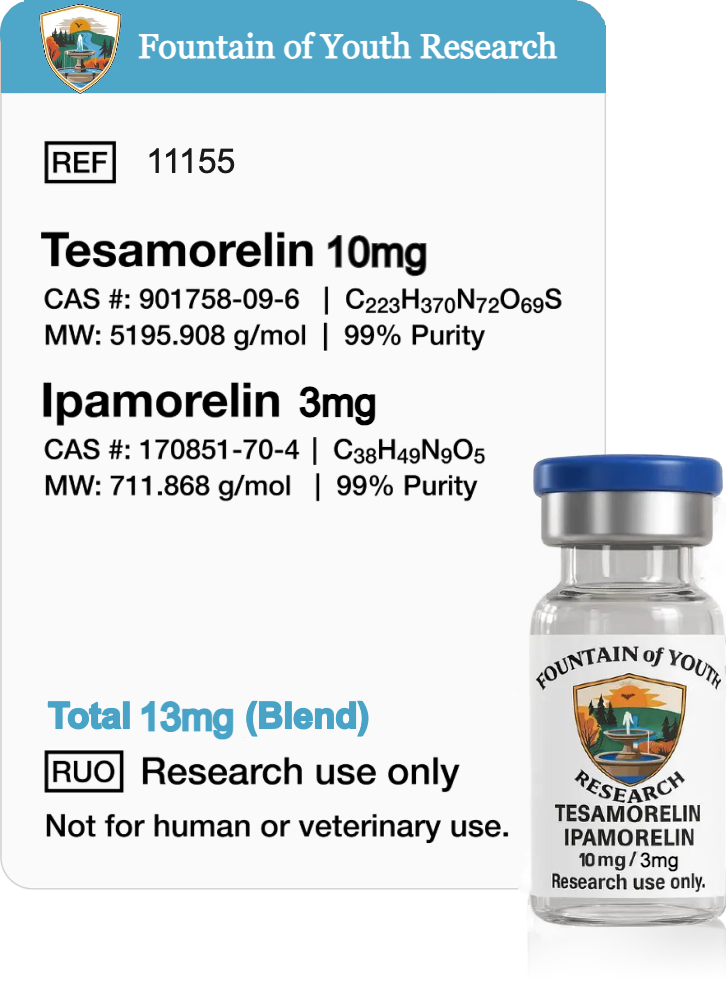
Both TB-500 and BPC-157 interact with growth hormone to support the healing process. BPC-157 increases the expression of growth hormone receptors on fibroblasts, extending their lifespan and enhancing their ability to promote soft tissue regeneration. TB-500 complements this effect by ensuring fibroblasts have sufficient actin to utilize their prolonged lifespans effectively. Combining TB-500, BPC-157, collagen, and a growth hormone secretagogue may synergistically accelerate wound healing, potentially offering a future alternative to current standard treatment regimens.
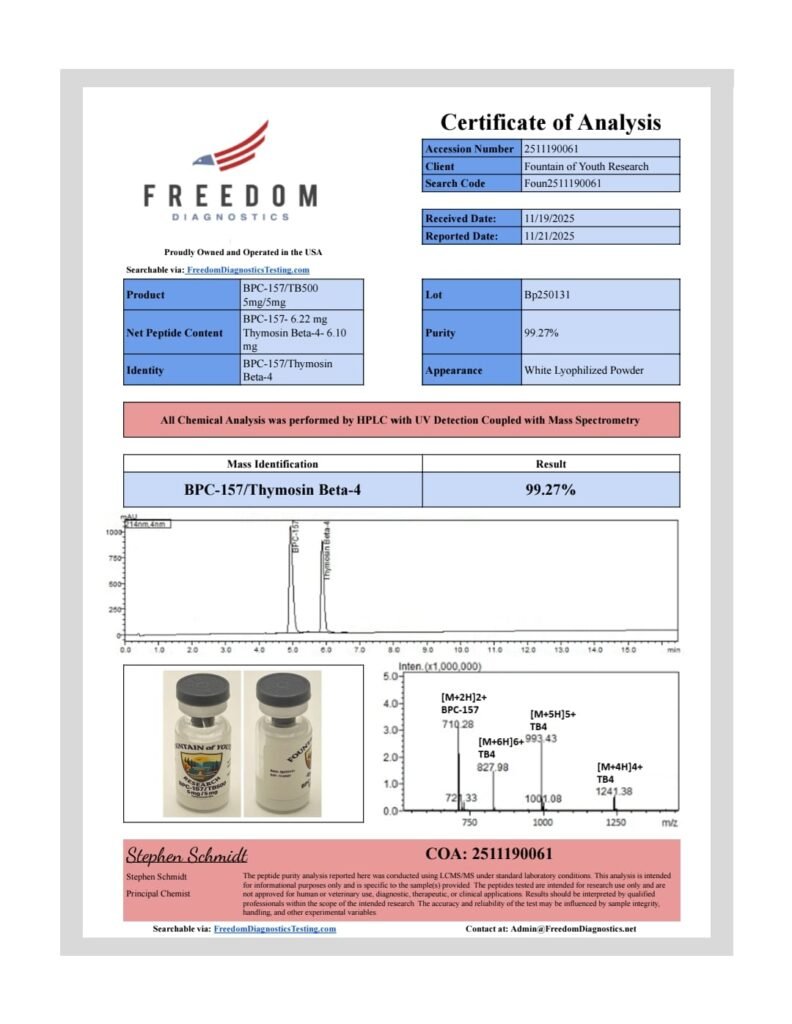
| Cas Number | 137525-51-0 & 885340-08-9 |
| PubChem CID | 9941957 & 16132341 |
| Molecular Weight | 1419.5 & 889.018 |
| Molecular Formula | C62H98N16O22 & C38H70N10O14 |
| Synonyms | Wolverine Stack |
| Storage (Lyophilized) | Lyophilized; ≥95–99% purity; −20 °C |