



GHK-Cu
GHK-Cu is a naturally occurring peptide originally isolated from human blood plasma and later identified in urine and saliva. Research has shown that this short peptide offers significant benefits for wound healing and immune support. It is also associated with anti-aging effects, including the suppression of free-radical damage, enhanced protein synthesis, antibacterial activity, and improved skin health through the stimulation and support of skin fibroblasts.
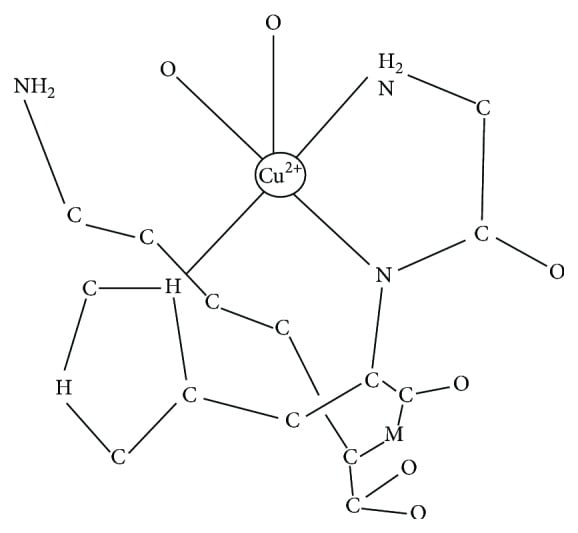
Structures
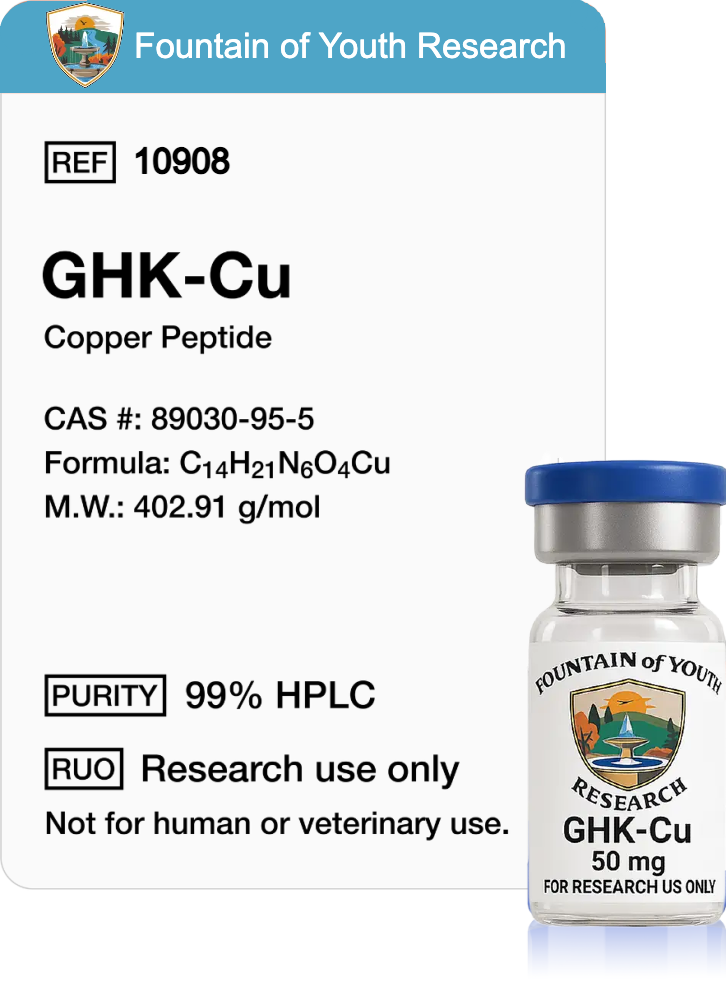
Sequence: Gly-His-Lys.Cu.xHAcMolecular Formula: C14H23CuN604
Molecular Weight: 401.91 g/mol
PubChem CID: 73587
CAS Number: 89030-95-5
GHK-Cu Research
1. GHK-Cu and Skin Healing
GHK-Cu is a naturally occurring component of human blood and plays an important role in skin regeneration pathways. Studies in skin cell cultures have shown that GHK-Cu stimulates both the synthesis and remodeling of collagen, glycosaminoglycans, and other extracellular matrix components, including proteoglycans and chondroitin sulfate. These effects are partly attributed to GHK-Cu’s ability to recruit and activate fibroblasts, immune cells, and endothelial cells. By attracting these cells to the site of injury, the peptide appears to help coordinate their activity and support efficient tissue repair.
GHK-Cu is a widely used ingredient in skincare and cosmetic formulations due to its beneficial effects on skin appearance and function. It has been shown to improve skin elasticity while promoting firmness and tightening. In addition, GHK-Cu may help reduce sun-related skin damage, lessen hyperpigmentation, and diminish the appearance of fine lines and wrinkles. Its ability to regulate collagen synthesis is particularly important for minimizing the appearance of scars, preventing hypertrophic healing, smoothing rough skin texture, and restoring the structural integrity of aging skin. These effects are thought to be mediated in part through increased levels of transforming growth factor-β, although GHK-Cu likely acts through multiple biochemical pathways and influences gene transcription at various levels.
Animal research further demonstrates that GHK-Cu can significantly accelerate wound healing. Studies in mice have shown increases in burn healing rates of up to 33%. Beyond recruiting immune cells and fibroblasts to the injury site, GHK-Cu also promotes new blood vessel formation. Because burn injuries often impair vascular regrowth due to tissue cauterization, these findings suggest a potential role for GHK-Cu in enhancing burn wound care and speeding recovery.
2. GHK-Cu and Bacteria
The invasion of tissue by pathogenic microorganisms is a major factor in delayed or impaired wound healing. Bacterial and fungal infections are especially problematic in burn patients and in individuals with compromised immune systems, such as those with diabetes or HIV. When combined with certain fatty acids, GHK-Cu forms a potent antimicrobial complex that has demonstrated activity against several bacteria and fungi commonly associated with non-healing wounds.
Clinical research in diabetic patients indicates that GHK-Cu can enhance outcomes when used alongside standard wound-care regimens. Patients receiving both standard care and GHK-Cu experienced approximately a 40% increase in wound closure and a 27% reduction in infection rates compared with control groups. Comparable improvements have also been reported in patients with ischemic open wounds.
3. GHK-Cu, Cognition, and Nervous System Function
Neuron loss associated with neurodegenerative diseases such as Alzheimer’s disease remains poorly understood, which complicates the development of effective treatments and limits the success of existing therapies. Emerging research suggests that GHK-Cu may help counteract age-related declines in neuronal function that contribute to these conditions. Studies indicate that GHK-Cu can enhance angiogenesis within the nervous system, promote nerve outgrowth, and reduce inflammation in the central nervous system. There is also evidence that the peptide may help normalize pathological gene expression, potentially supporting the restoration of healthy function in compromised neural systems.
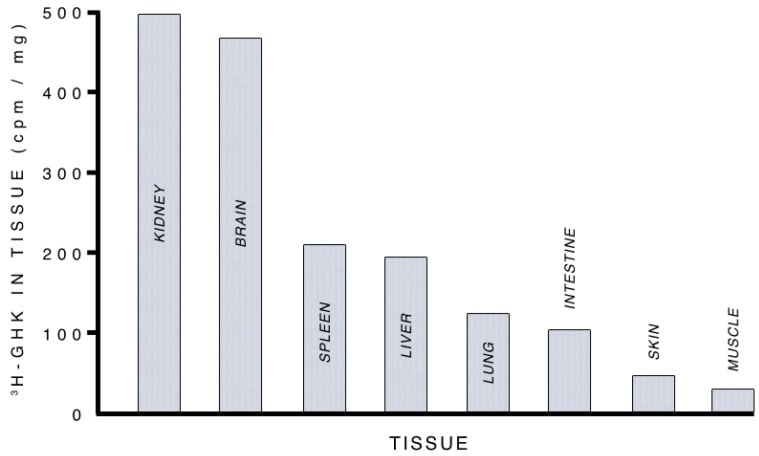
GHK-Cu is present in relatively high concentrations in the brain, although its levels decline with age. Some researchers propose that GHK-Cu plays a protective role in nervous system tissues by guarding against age-related stressors such as gene dysregulation. According to this view, the age-related reduction in GHK-Cu—rather than the emergence of entirely new disease processes—may be a contributing factor in the development of neurodegeneration.
Research in rat models suggests that one mechanism by which GHK-Cu may protect brain tissue is through the inhibition of apoptosis. This effect appears to be mediated via the miR-339-5p/VEGFA signaling pathway, which becomes active following cerebral hemorrhage and stroke. In these models, GHK-Cu was shown to improve neurological function, reduce cerebral edema, and inhibit neuron loss that is typically induced by the overexpression of miR-339-5p.
4. GHK-Cu and Side Effects of Chemotherapy
Research in mouse models indicates that GHK-Cu may protect lung tissue from fibrosis that can occur following treatment with the chemotherapy agent bleomycin. These findings suggest a potential role for GHK-Cu as a chemotherapy adjuvant, possibly allowing higher or more effective dosing of essential anticancer drugs without increasing the risk of adverse side effects. Unlike many studies, this research also identified a likely biological pathway underlying the protective effect. GHK-Cu appears to regulate levels of tumor necrosis factor-alpha (TNF-α) and interleukin-6 (IL-6), both key inflammatory mediators that influence the extracellular matrix and smooth muscle tissue of the lungs. By reducing pulmonary inflammation, GHK-Cu helps prevent fibrotic remodeling and supports healthier collagen deposition.
Similar protective effects on lung tissue have been observed in mouse models of acute respiratory distress syndrome (ARDS), a severe inflammatory lung condition that can develop rapidly and may be fatal. ARDS is commonly associated with trauma, infection, and exposure to certain medications, including some chemotherapeutic agents. In these models, GHK-Cu again demonstrated beneficial effects through the downregulation of TNF-α and IL-6 expression, highlighting a consistent anti-inflammatory mechanism of action.
5. GHK-Cu and Pain Reduction
Studies in rat models have shown that GHK-Cu produces dose-dependent reductions in pain-related behaviors. These analgesic effects appear to be mediated through increased levels of endogenous pain-modulating amino acids, including L-lysine and L-arginine. By enhancing these natural pathways, GHK-Cu may offer alternative approaches to pain management that do not depend on opioid medications or nonsteroidal anti-inflammatory drugs (NSAIDs), which are associated with addiction risk and potential cardiovascular side effects.
In animal studies, GHK-Cu has demonstrated minimal adverse effects, low oral bioavailability, and favorable subcutaneous bioavailability. It is important to note that dosage data derived from animal models do not directly translate to humans. GHK-Cu products are intended strictly for educational and scientific research purposes and are not approved for human consumption.
| Cas Number | 89030-95-5 |
| PubChem CID | 5311026 |
| Molecular Weight | 340.8 g/mol |
| Molecular Formula | C14H24CuN604 |
| Synonyms | GHK-Cu Glycyl-L-histidyl-L-lysine-Cu(II) Copper tripeptide-1 Copper (II) glycyl-L-histidyl-L-lysine |
| Storage (Lyophilized) | Lyophilized; ≥95-99% purity; -20 °C |